Topology-aware workload management
An inspectable workload-management model with per-cluster queues, topology-aware resource placement, transactional allocation, and a React interface for cluster and job state.
The question
How should queue order, resource availability, and hardware topology influence an allocation? This project makes those decisions visible without requiring a physical cluster.
What is implemented
FIFO and priority queues, deterministic Pack and Spread placement, multi-node allocations, institute quotas, reservations, lifecycle history, and an interactive React cluster view. PostgreSQL stores individual resource units and allocation mappings.
The architectural boundary
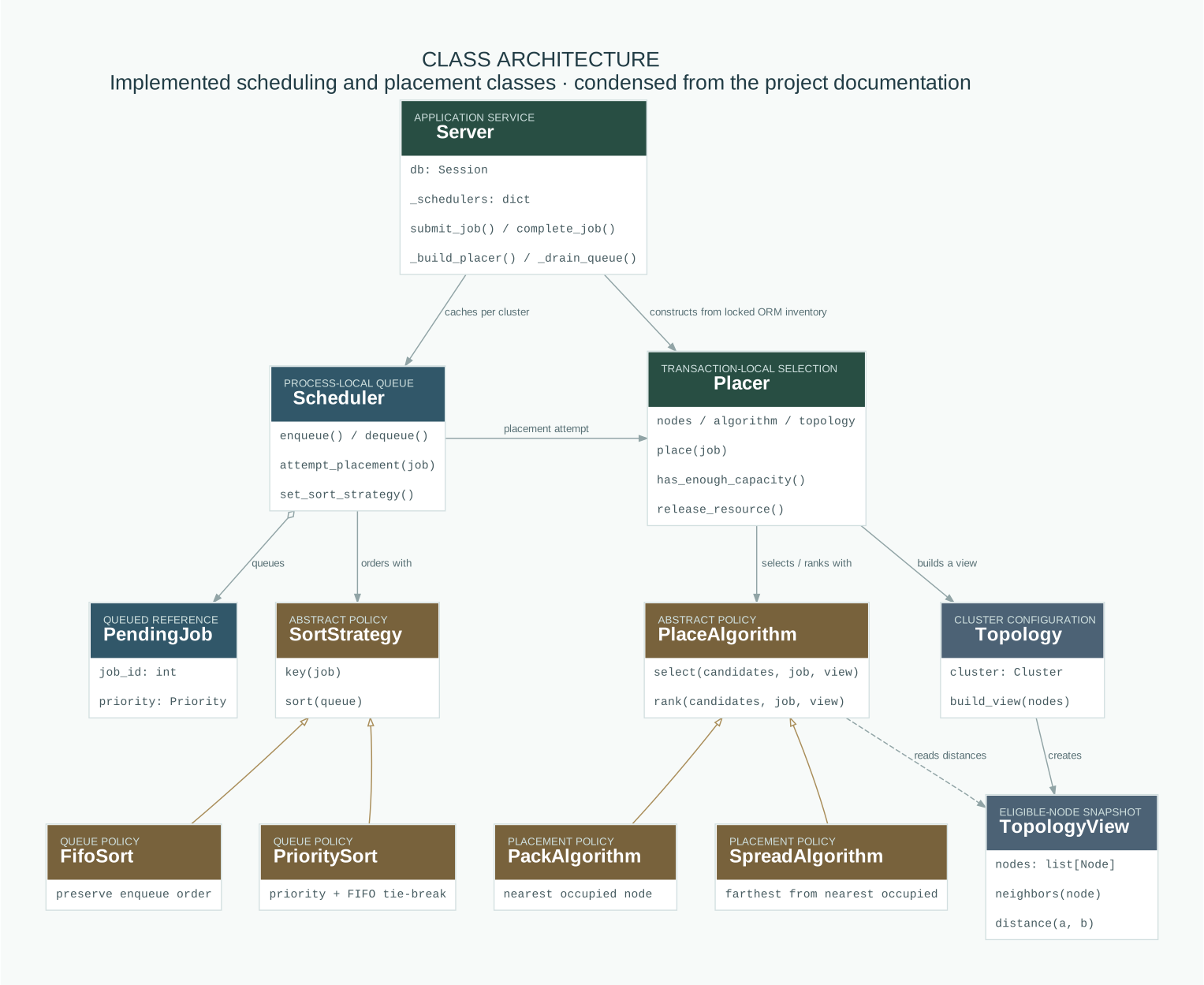
The scheduler selects the next placement attempt. A transaction-local placer chooses specific resource units from locked inventory. The server coordinates policy and persistence; API routes own commit and rollback.
Network topology and GPU discovery
The leaf–spine model registers existing compute Nodes through their NIC endpoints and connects them to switch ports and physical links. Path discovery checks operational state, configured capacity, and latency; GPU candidate queries combine those paths with the existing resource-unit inventory.
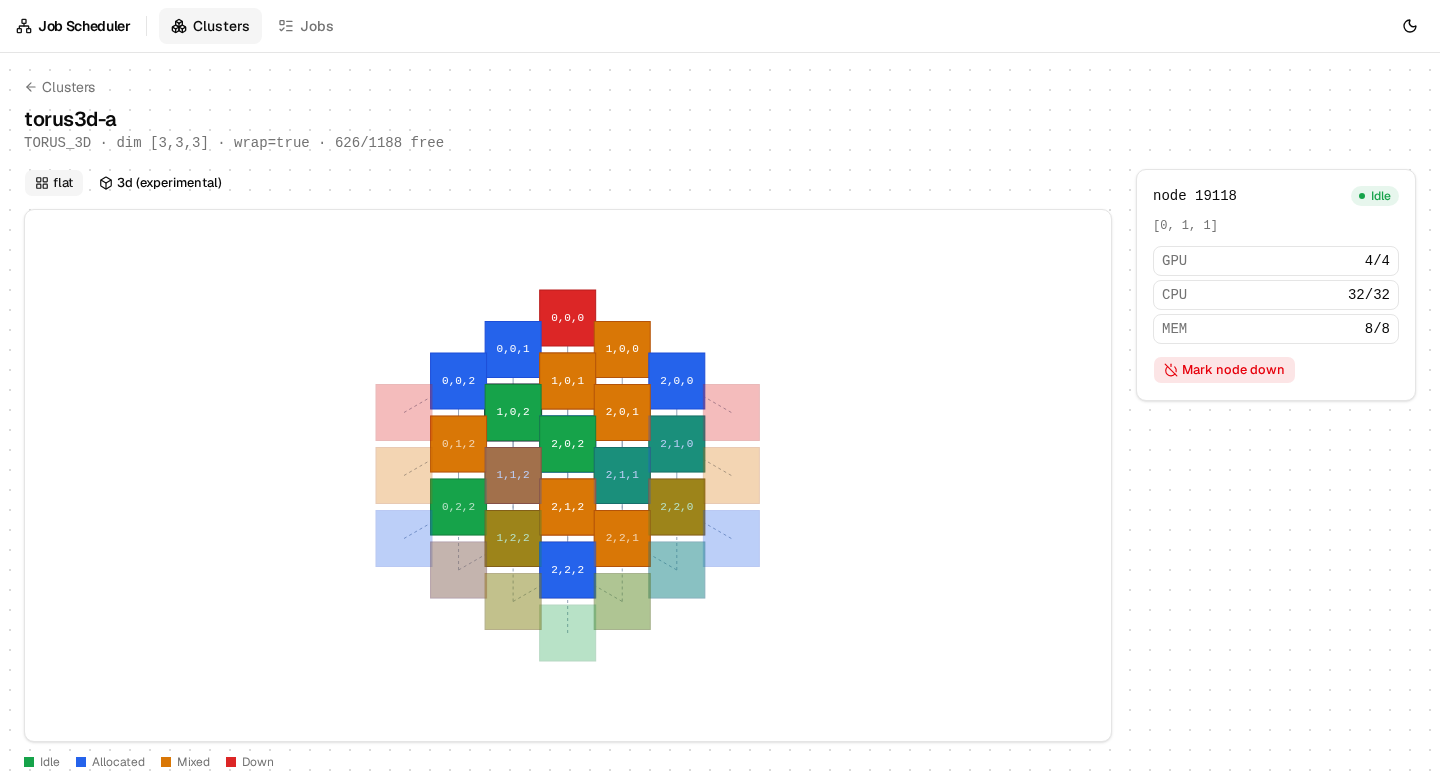
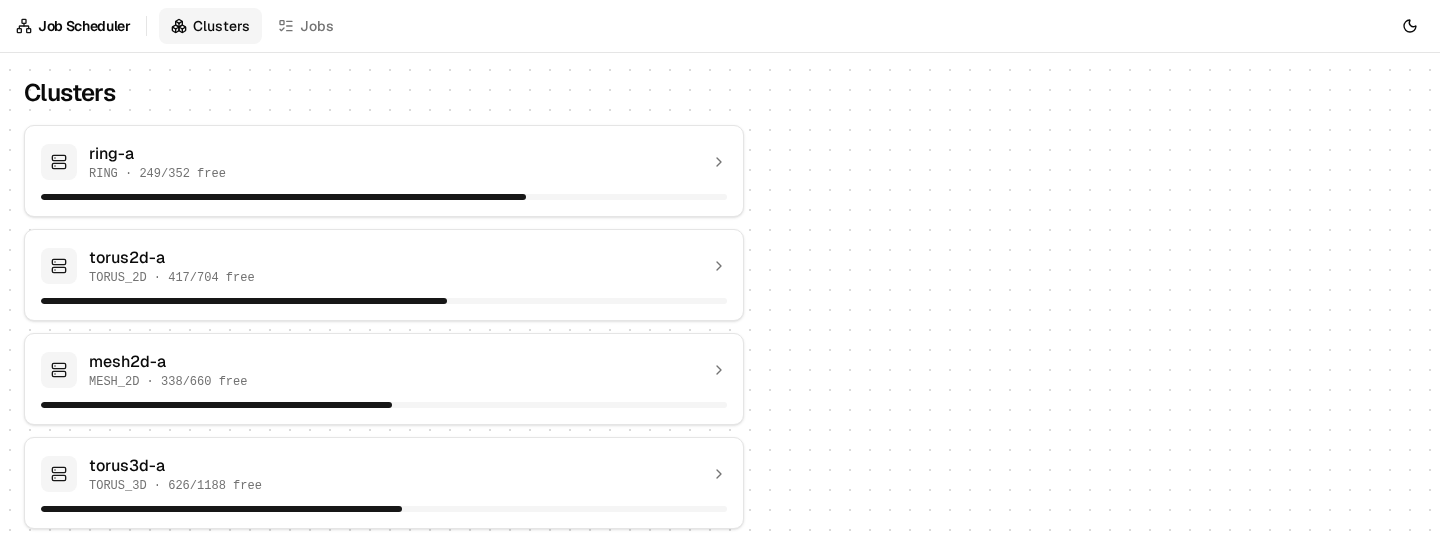
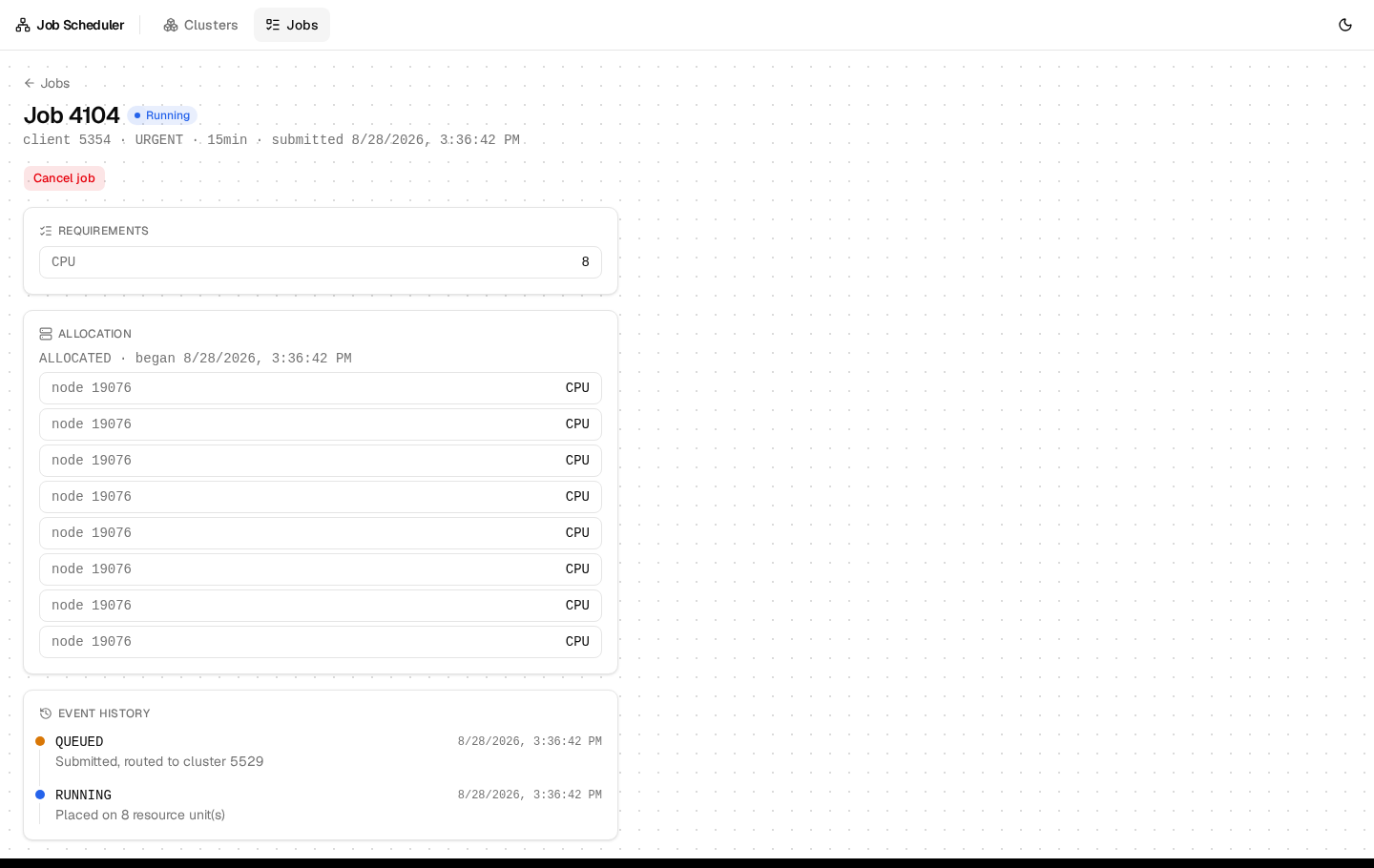
Cluster state and job history.
Classes & relationships.
Class architecture
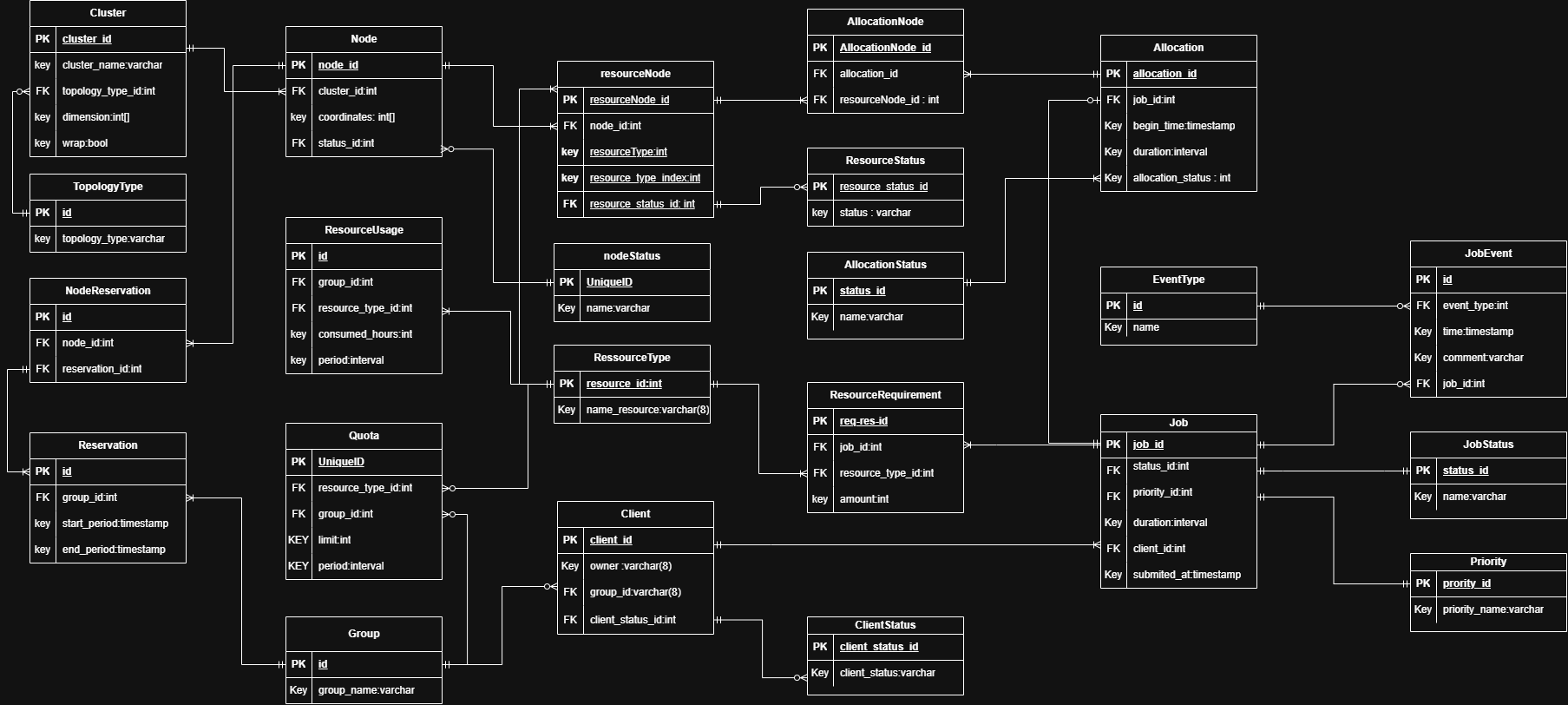
Entity relationships
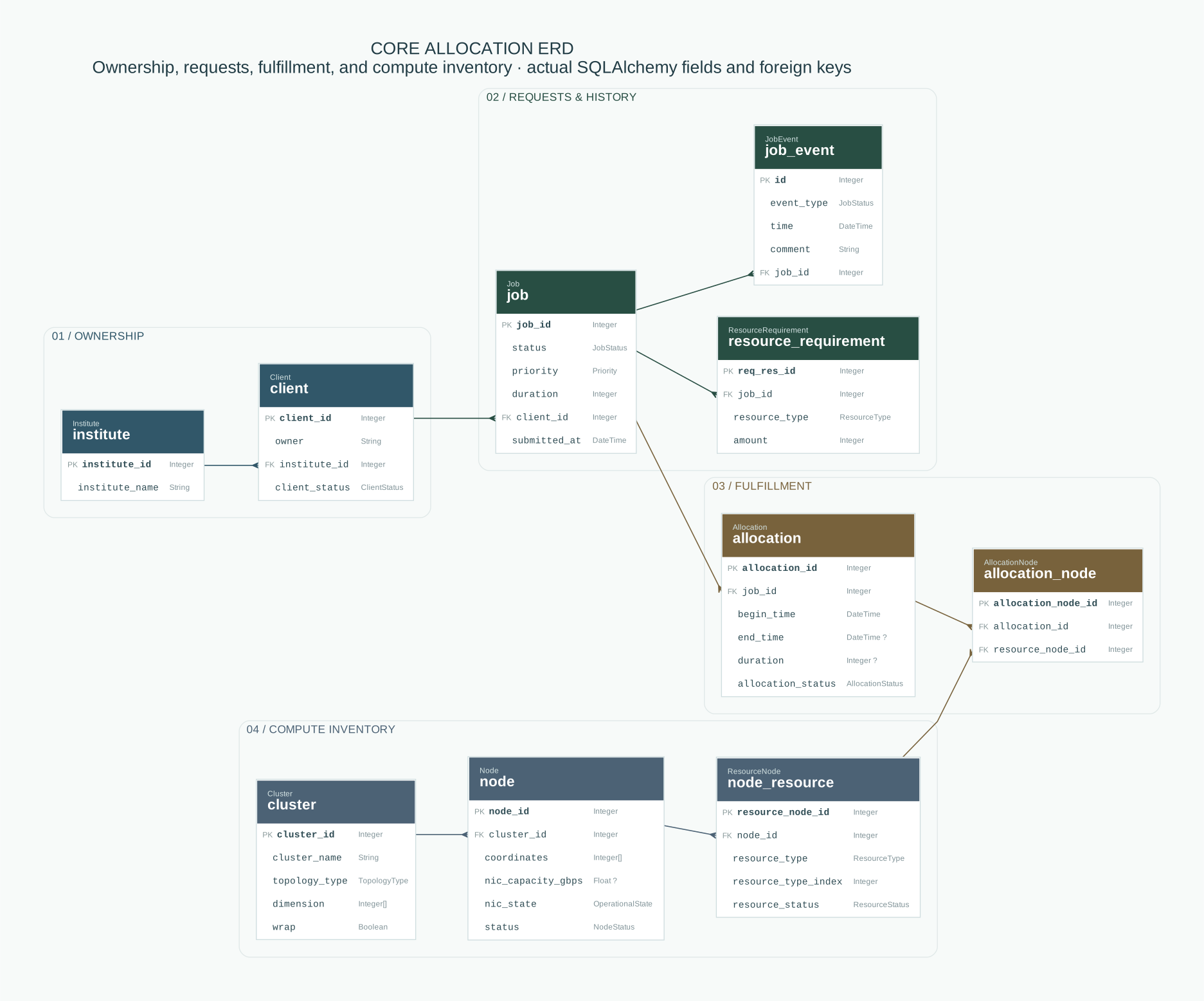
Open the complete current schema · all 14 tables ↗
The project’s original ERD drawings
The original whiteboard and subsystem SVGs are preserved here as design history. The live schema has evolved; the current-model ERD above follows the ORM rather than the older lookup-table design.