SpiNNaker2 supercomputer infrastructure
Allocation engines, Slurm integration, machine discovery, and runtime infrastructure for a neuromorphic supercomputer spanning approximately five million cores and 720 interconnected boards.
The machine and my role
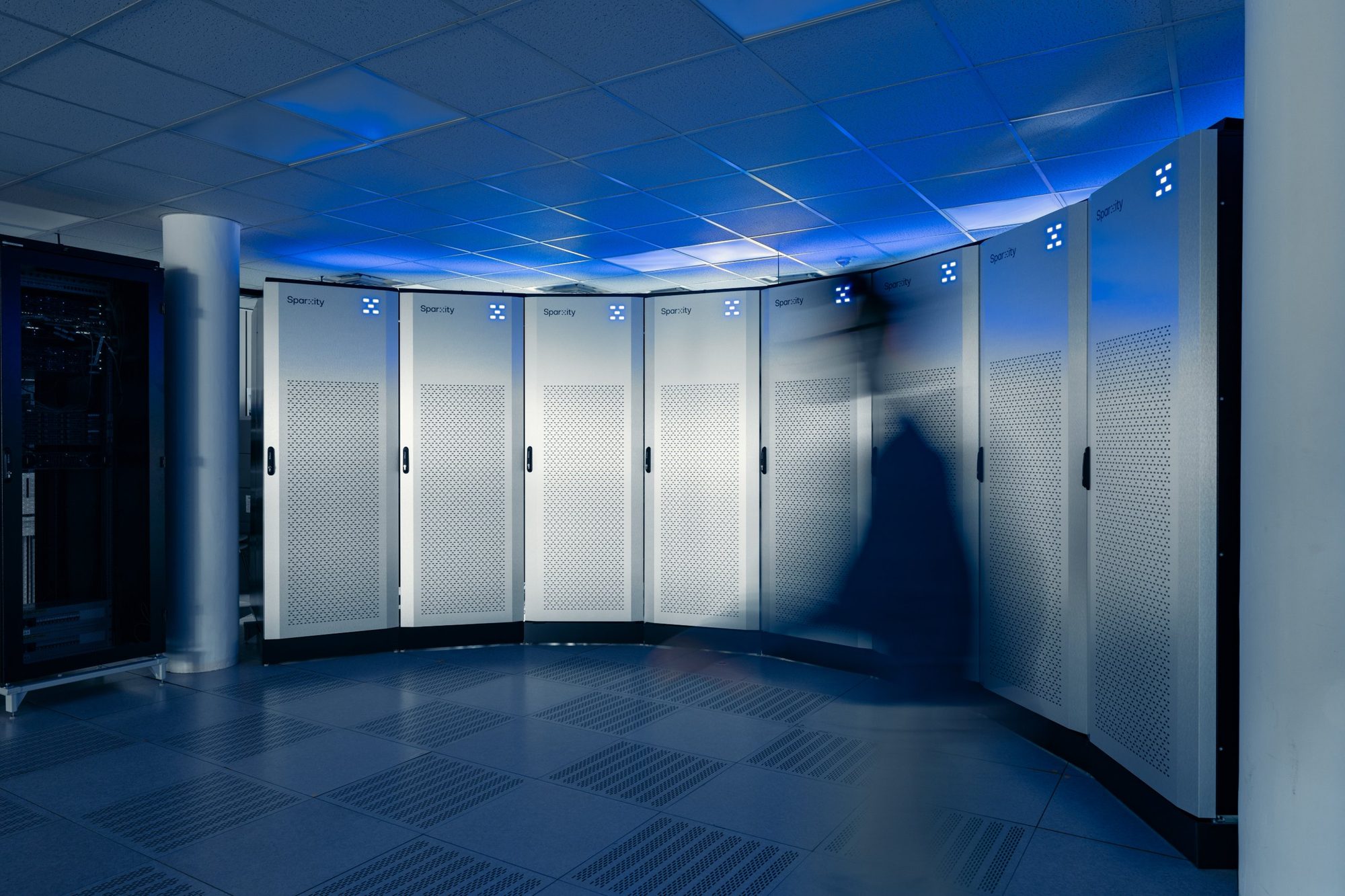
At SpiNNcloud, now Sparxity, I contributed to runtime and infrastructure software for SpiNNaker2. The platform described in my experience spans approximately five million cores across 720 boards in a 2D hexagonal torus. My focus was the software that acquires, partitions, discovers, and releases that hardware.
Three allocator variants
I drove architecture and implementation across allocators for internal use, customer deployments, and a Slurm-managed supercomputer. The work ranged from a sliding-window greedy torus algorithm to deterministic best-fit packing using recursive free-region partitioning, tree traversal, wrap-around coordinates, and fragmentation-aware scoring.
Slurm scheduling, physical placement
I proposed and drove the move toward Slurm integration. The design preserved native select/cons_tres scheduling authority, priorities, backfilling, and fair-share, while a prolog-stage engine selected physical boards and provided job environment information. I investigated GRES, Generic Licenses, SPANK, and enforcement tradeoffs with the team.
Discovery, routing, and machine bring-up
My C/C++ contributions included chip and board discovery, nearest-neighbor exchanges, flood-fill traversal, reachability, and routing. I also contributed to board-to-board connectivity and link control so allocated regions could be isolated before discovery and operate as coherent machines.
Inventory, concurrency, and release
I worked through a progression from YAML-backed state protected by POSIX locks to database-backed board inventory and allocation mappings. Queues, thread synchronization, transactions, cleanup, health checks, and reconciliation all supported the same goal: consistent ownership of physical hardware.
Engineering with other teams
The work included technical ownership, specifications, design reviews, and live demonstrations with runtime and infrastructure colleagues, alongside exchanges with researchers at Sandia National Laboratories and the University of Manchester. This case study summarizes my contribution; the professional implementation is separate from my public workload-management project.